Discover the Major Prophets of the Bible—Isaiah, Jeremiah, Ezekiel, and Daniel. Learn their messages, timelines, kings, and key prophecy themes.
Who were the Major Prophets?
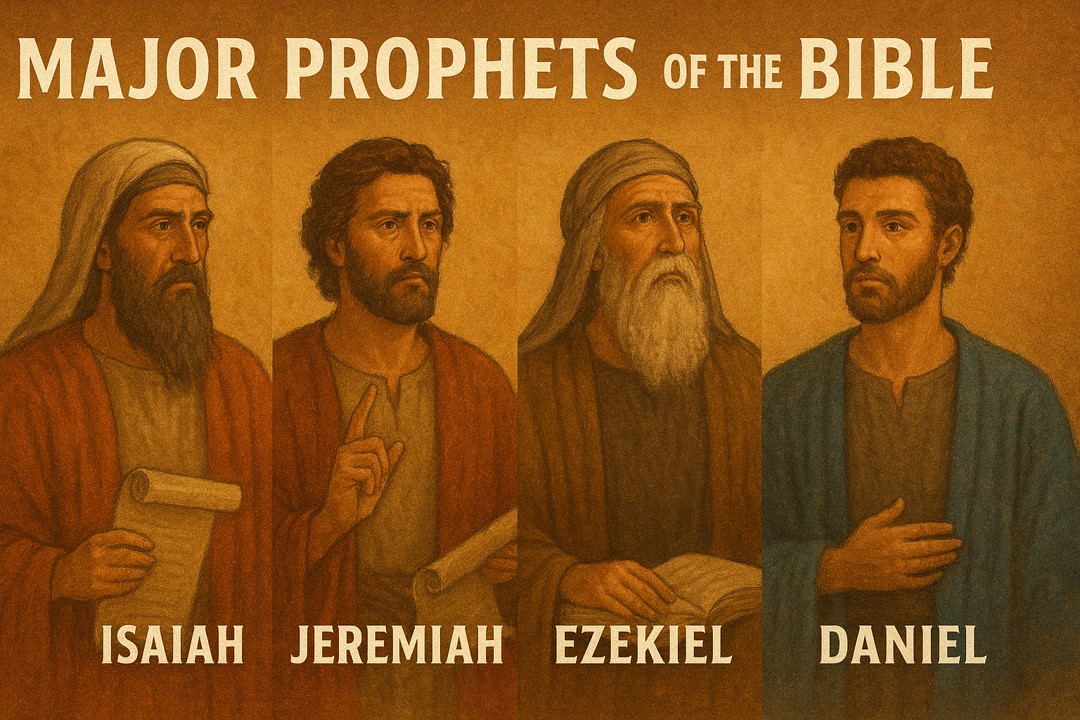
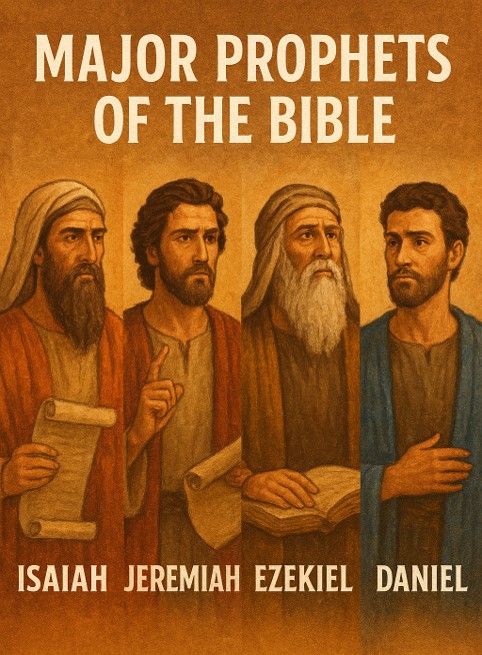
When most people think of prophecy, they picture mysterious visions or end-time warnings. But the Major Prophets of the Bible—Isaiah, Jeremiah, Ezekiel, and Daniel—were much more than that. These men were voices of truth during some of Israel’s darkest days. Their messages blended judgment, hope, and restoration, all pointing back to God’s faithfulness.
These 4 prophets differ from the 12 ‘minor’ prophets only in the length of the works written about them in the Holy Scriptures. The term ‘Major’ does not in any way detract from the impact that the 12 ‘Minor’ Prophets had on the overall messages or guidance to the people of the Bible.
In this overview, we’ll look at who these 4 Major prophets were, when they lived, the kings they served under, and the main themes of their ministries.
1. Isaiah – The Prophet of Salvation
Years of Ministry: c. 740–681 BC
Kings During His Time: Uzziah, Jotham, Ahaz, and Hezekiah (Isaiah 1:1)
Main Theme: Salvation through judgment and the coming of the Messiah
Isaiah’s ministry began in a time of prosperity but moral decay. His book spans 66 chapters and is sometimes called “the miniature Bible” because it mirrors the structure of Scripture—law, judgment, and redemption.
Isaiah’s message was clear: God is holy, and His people must return to Him or face judgment. Yet amid the warnings, Isaiah gives some of the most powerful prophecies about the coming Savior:
“For a child will be born to us, a son will be given to us… and His name will be called Wonderful Counselor, Mighty God, Eternal Father, Prince of Peace.”
(Isaiah 9:6, NASB)
Isaiah’s writings show how God’s justice and mercy intertwine. He warned kings not to rely on foreign alliances but to trust in the Lord alone. He spoke out against social injustice, religious hypocrisy, and empty ritual, calling Israel to genuine repentance. Yet, Isaiah’s vision extended far beyond his own time. He foresaw a future Messiah who would bear the world’s sins (Isaiah 53) and restore creation itself (Isaiah 65:17).
Today, Isaiah stands as a timeless reminder that God’s salvation is both personal and cosmic—it transforms hearts and renews nations. His prophecies bridge the Old and New Testaments, pointing unmistakably to Jesus Christ as the ultimate fulfillment of God’s promise.
2. Jeremiah – The Weeping Prophet
Years of Ministry: c. 627–586 BC
Kings During His Time: Josiah, Jehoiakim, Zedekiah
Main Theme: Judgment on sin and the promise of a new covenant
Jeremiah had one of the hardest jobs in the Old Testament. Called as a young man, he was tasked with warning Judah that their rebellion would lead to destruction. Despite his deep sorrow, Jeremiah never stopped speaking the truth.
“Before I formed you in the womb I knew you, and before you were born I consecrated you; I have appointed you a prophet to the nations.”
(Jeremiah 1:5, NASB)
Jeremiah’s ministry spanned over forty years of rejection and ridicule. He witnessed the collapse of Jerusalem, the burning of the Temple, and the heartbreak of exile. Yet, even through tears, he proclaimed God’s unchanging faithfulness. The prophet’s emotional honesty—his confessions, laments, and prayers—make his book deeply human.
Jeremiah is also widely attributed to have written the book of Lamentations, which is very much in his style though his name is not actually mentioned in this book.
At the heart of Jeremiah’s message lies the New Covenant:
“I will put My law within them and on their heart I will write it; and I will be their God, and they shall be My people.”
(Jeremiah 31:33, NASB)
Jeremiah teaches that external religion is never enough. God desires heart transformation, not hollow ritual. His life models perseverance, compassion, and integrity under pressure. Even when everyone turned against him, Jeremiah remained faithful—showing that true success in ministry isn’t measured by popularity but by obedience.
3. Ezekiel – The Prophet of God’s Glory
Years of Ministry: c. 593–571 BC
Kings During His Time: During the Babylonian exile (no reigning king of Judah)
Main Theme: God’s glory, human responsibility, and restoration
Ezekiel was both a priest and a prophet, ministering among the exiles in Babylon. His book opens with a stunning vision of God’s glory—a chariot-throne surrounded by fire and living creatures—symbolizing God’s power and presence even in a foreign land.
“Then you will know that I am the LORD, when I open your graves and cause you to come up out of your graves, My people.”
(Ezekiel 37:13, NASB)
Ezekiel’s prophecies are vivid and symbolic. He acted out parables—lying on his side, shaving his head, and drawing siege maps—to communicate God’s message to a hardened people. The central truth of his ministry is that God’s glory cannot dwell with sin. Because of idolatry and corruption, God’s presence departed from the Temple. But Ezekiel also saw the promise of restoration: a valley of dry bones coming back to life and a future temple filled with divine glory once more.
Ezekiel’s message reaches beyond history. It reveals a God who disciplines to purify and who restores to display His glory. His vision challenges modern readers to remember that God’s presence isn’t tied to a building or nation—it rests with those who walk faithfully with Him.
4. Daniel – The Prophet of Sovereignty and Faithfulness
Years of Ministry: c. 605–536 BC
Kings During His Time: Nebuchadnezzar, Belshazzar, Darius, Cyrus
Main Theme: God’s sovereignty over kingdoms and the endurance of faith
Daniel’s story takes us from Jerusalem’s fall to the royal courts of Babylon and Persia. Captured as a teenager, Daniel rose to prominence through his wisdom and unshakable faith.
“He changes times and seasons; He removes kings and establishes kings.”
(Daniel 2:21, NASB)
Unlike many prophets, Daniel served within a pagan empire. His life proves that faithfulness to God is possible even in hostile environments. Whether interpreting dreams, surviving the lions’ den, or standing firm under pressure, Daniel demonstrated unwavering trust in God’s sovereignty.
His visions reveal the rise and fall of world empires, the coming of the Son of Man (Daniel 7:13), and the ultimate triumph of God’s eternal kingdom. Daniel’s prophecies lay the foundation for much of biblical eschatology and are echoed in Revelation. Yet beyond the symbolism and timelines, Daniel’s life teaches a simple truth: integrity and faith will always outlast earthly power.
For modern believers, Daniel stands as a model of spiritual resilience. He navigated political intrigue, moral compromise, and cultural pressure—but he never lost his identity as God’s servant. His message still speaks to those seeking to live faithfully in a world that often rejects divine truth.
Why the Major Prophets Still Matter Today
The messages of Isaiah, Jeremiah, Ezekiel, and Daniel may be ancient, but they speak directly to our modern world. Themes like repentance, justice, faithfulness, and hope never grow old. These prophets challenge us to see beyond the chaos of our times and remember that God’s plan is still unfolding.
Their words remind believers that:
- God’s holiness demands righteousness.
- God’s judgment is just, but His mercy endures.
- God’s sovereignty rules over every empire, kingdom, and power.
When we study the Major Prophets of the Bible, we’re not just reading history—we’re hearing the heartbeat of God for His people.
Related Topics
- Minor Prophets of the Bible Explained
- Understanding Biblical Prophecy in the Old Testament
- The Complete Summary Of The Bible
Recent Posts
A Simple Guide to Understanding the Whole Bible If you’ve ever started reading the Bible from cover to cover, you’ll know how easy it is to get lost. Genesis starts off well enough with...
Tithing: What Does the Bible Say? For generations, tithing has been a central part of Christian teaching. But what does the Bible actually say about tithing — both under the Old Covenant and in...